The Bosphorus sunset changes with the season in three ways: timing, length and colour. In summer the sun sets late in the evening and the warm light lingers through a long, gradual golden hour. In winter it drops in the late afternoon, the glow is brief, and the cold, clear air gives sharper light with cooler pink and violet tones. Neither is better than the other — they simply hand you a different sky over the same shoreline.
What changes between summer and winter
Three things shift, and they shift together. Istanbul sits far enough north that day length swings a lot across the year, so the time of sunset moves by hours between June and December, not minutes. The length of the warm light before and after the sun goes down changes with it. And the quality of the air — humid and hazy in summer, cold and clear in winter — changes the colour. The route and the landmarks stay the same whatever the date. It is the light falling on them that is seasonal.
When the sun sets, and for how long
In high summer the days are long and the sun does not set until well into the evening, often after eight around midsummer. Golden hour is long and gradual, the warm light easing down over a stretch of time, and a soft twilight lingers afterward. Winter is the opposite. The sun sits low all day and is gone by late afternoon, and golden hour is short and quick, the light fading within what feels like minutes before the shoreline goes dark. Spring and autumn sit in between, with sunset creeping earlier or later week by week. Because a sunset cruise is timed around the light, this is why a summer sailing is a late-evening outing and a winter one an afternoon one.
The colour of the light
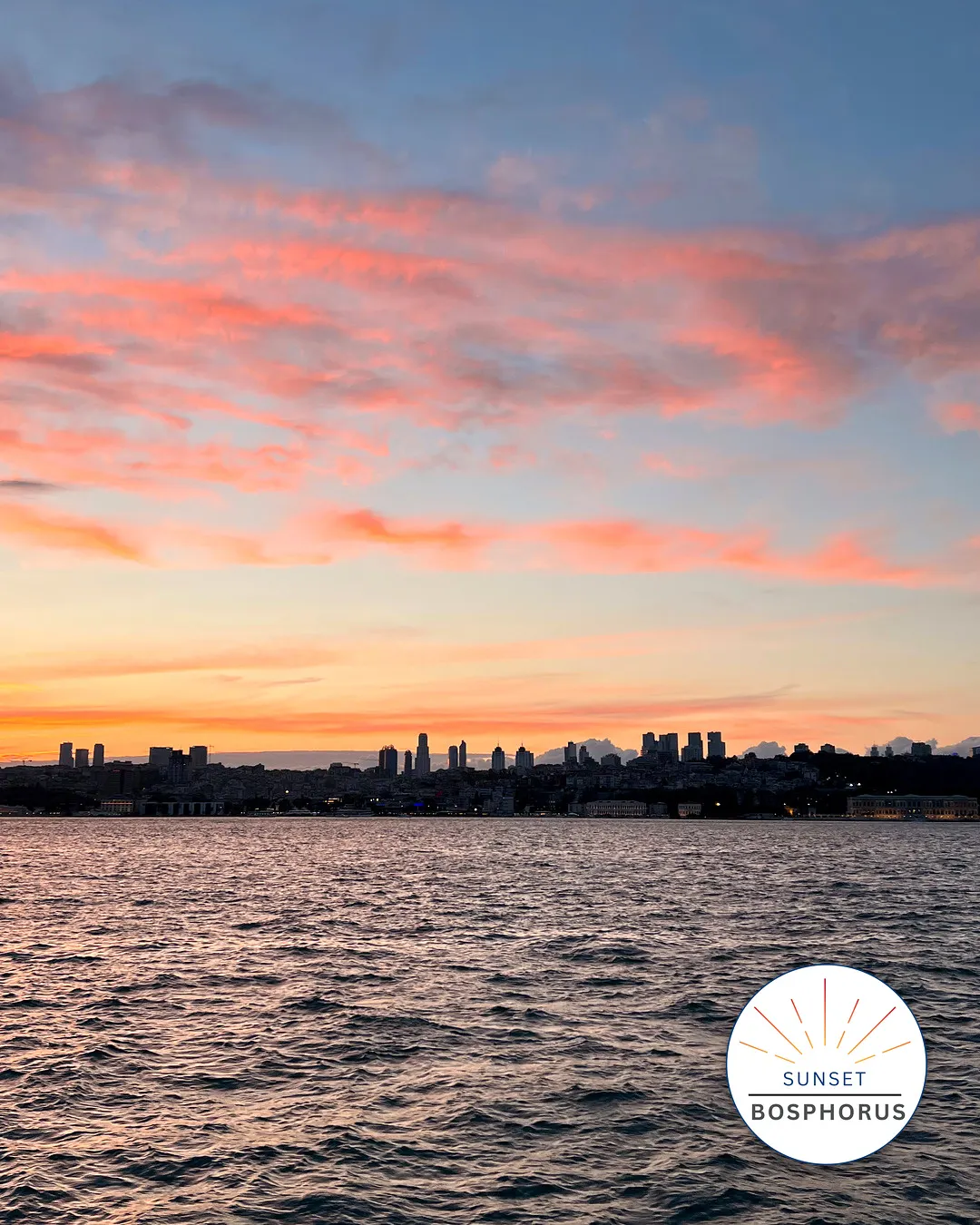
Summer air over the Bosphorus is warm and often humid, which scatters the light into a soft, hazy, honey-gold glow. The sun can sink into a milky band on the horizon, and the whole scene reads diffuse and gentle. Winter air is cold and dry, so the light stays sharp and saturated. The low sun rakes hard across the water, the silhouettes of domes, minarets and the bridge towers stand crisp against the sky, and the afterglow often deepens into pink and violet rather than fading to haze. If you want soft and warm, that is summer. If you want clear and vivid, that is winter.
What this means for your cruise
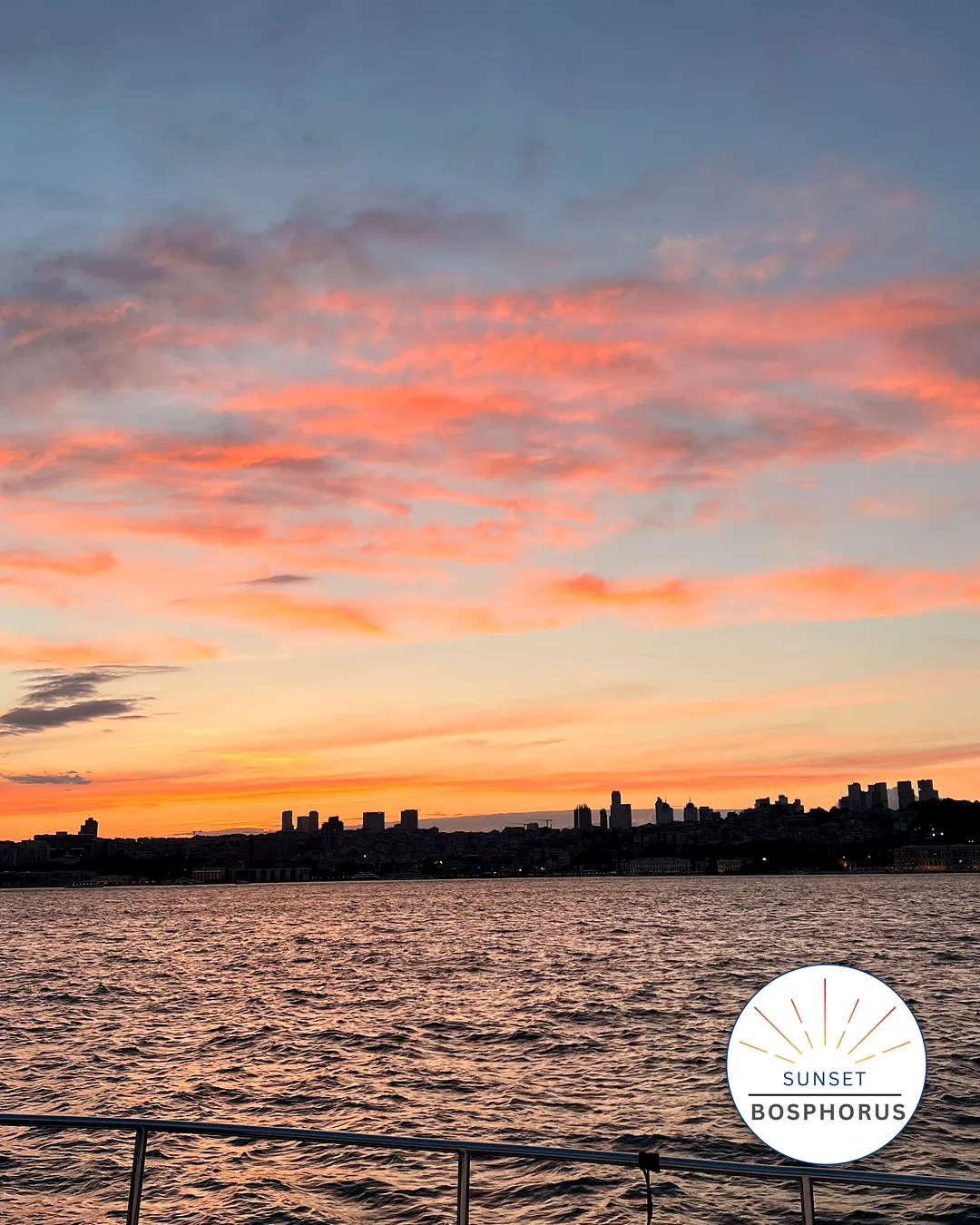
Whatever the season, the boats leave from Karaköy and follow the same stretch — past Dolmabahçe and Çırağan palaces, Ortaköy Mosque beneath the first bridge, the July 15 Martyrs Bridge, up toward Rumeli Fortress, with the Maiden’s Tower offshore near the Asian side. Departure is set to put you on the water through golden hour, so you catch the best of the light in any month. You simply board later in summer and earlier in winter. The free twelve-language audio guide runs year-round, naming each landmark as you draw level with it. In practice, a summer cruise rewards lingering at the rail of the open top deck, while a winter one is about catching a short, sharp show and ducking into the heated cabin between highlights.
Frequently asked questions
Does the sun really set that much earlier in winter? Yes. The gap is large — well into the evening around midsummer, against the late afternoon in December — because Istanbul’s day length changes a lot across the year.
When is golden hour longest? In summer. The warm light eases down over a long, gradual stretch, while in winter it comes and goes quickly.
Is the winter light worse for photos? No, just different. The clear cold air gives sharper, more saturated colour and crisp silhouettes, which many photographers prefer to the summer haze.
Does the cruise departure time change with the season? Yes. Because it follows the sunset, boarding at Karaköy is later in summer and earlier in winter, so check the time for your date.
See how the light falls in your season. Book your sunset cruise from Karaköy and let the twelve-language audio guide talk you along the shoreline while the sky changes overhead.